
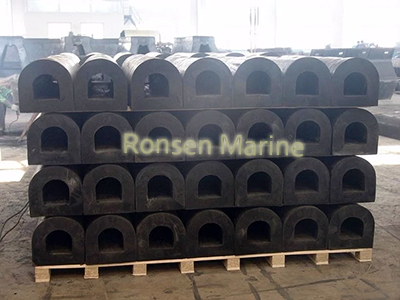
If you’ve ever watched a large ship dock, you’ve seen the silent workhorses that make it all possible: rubber fenders. Among the many types available, the D rubber fender (often simply called a “D fender”) is one of the most common and versatile. This guide explains everything you need to know about D-type rubber fenders, from their basic definition to their key benefits and typical uses.
What is a D Rubber Fender?
A D rubber fender is a marine bumper named for its “D”-shaped cross-section. Unlike cylindrical fenders which are round, the D fender features a flat back and a curved, semi-circular front. This shape is not just for aesthetics—it is a functional design that offers unique advantages for berthing and mooring operations.
Typically made from high-quality extruded rubber, D fenders are known for their simplicity, durability, and ease of installation. They are often bolted directly to the side of a dock or vessel, providing a reliable cushioning effect.
How Does a D Rubber Fender Work?
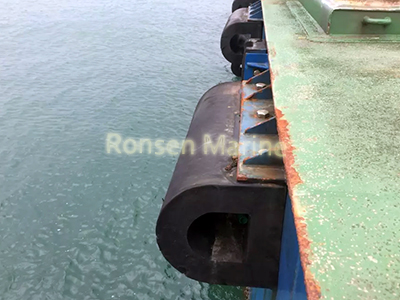
The primary function of any rubber fender is to act as a buffer that absorbs kinetic energy. When a ship makes contact with a dock, it carries significant momentum. Without protection, this impact can damage both the vessel’s hull and the port infrastructure.
Here is how a D rubber fender works:
1. Energy Absorption: When a vessel hits the fender, the curved front of the “D” shape compresses. This compression absorbs the ship’s berthing energy.
2. Force Reduction: By absorbing this energy, the fender reduces the reaction force transferred back to the ship and the dock, minimizing the risk of structural damage.
3. Impact Distribution: The fender helps distribute the impact load over a larger area of the ship’s hull, preventing concentrated stress points that could cause indentation or cracking.
Key Benefits and Characteristics of D Fenders
D fenders are a popular choice in the maritime industry for several reasons:
· Simple and Easy Installation: They can be securely mounted using bolts or flat steel fasteners directly to the structure.
· High Durability: Made from tough rubber compounds like natural rubber, SBR, or EPDM, they resist seawater, sunlight, and ozone, ensuring a long lifespan.
· Wide Range of Applications: They are suitable for various vessels and dock types.
· Customization: D fenders can be extruded in long lengths and cut to size, drilled, or even pre-curved to meet specific project requirements.
· Cost-Effective: Compared to more complex fender systems like cell or cone fenders, D fenders are generally an affordable and effective solution for lower-impact applications.
Common Applications: Where Are They Used?
Because of their versatility, D rubber fenders are used across the maritime industry:
· Tugboats and Workboats: They are frequently installed along the hulls of tugboats, ferries, and patrol boats that make frequent contact with other vessels and docks.
· Small Docks and Harbors: D fenders are an excellent choice for fishing harbors, marinas, and inland waterway docks where smaller vessels are present.
· Jetties and Wharves: They offer reliable protection for small craft jetties and general-purpose wharves.
· As a Protective Band: Small to medium-section D fenders are often used as a continuous protective band along the structures of workboats and barges.
D Fenders vs. Other Types
While D fenders are highly effective, they are best suited for specific scenarios. Here is how they compare to other common rubber fenders:
[supsystic-tables id=14]
How to Choose the Right D Rubber Fender
Selecting the correct fender involves considering several factors:
1. Vessel Size and Weight: Larger, heavier ships generate more berthing energy and may require larger or more D fenders.
2. Docking Speed: The speed at which the vessel approaches the dock directly impacts the energy that needs to be absorbed.
3. Dock Structure: The type of dock or pier and the available mounting space will influence your choice.
4. Environmental Conditions: Consider the weather, water salinity, and UV exposure to select the appropriate rubber compound.
Conclusion
The D rubber fender is a fundamental component of marine protection. Its simple, effective design offers a robust and economical solution for protecting vessels and dock structures in a variety of low-to-medium-impact scenarios. Whether used on a tugboat or a small harbor dock, the D fender remains a trusted choice for maritime professionals worldwide.

