
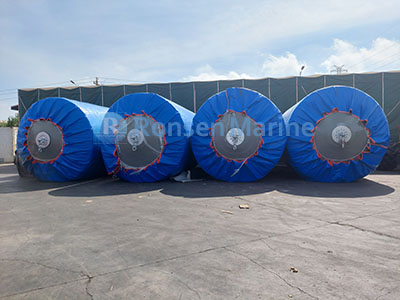
 When safety, durability, and low maintenance are top priorities, shipowners and port authorities turn to one solution: the foam filled fender. Also known as a solid polyurethane fender or EVA foam fender, this technology represents a major leap forward from traditional inflatable systems. But what exactly is it, and why is it considered “unsinkable”?
This guide covers everything you need to know, from construction and working principles to technical specifications and real-world applications.
What Is a Foam Filled Fender?
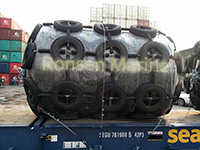
A foam filled fender is a type of solid, floating marine fender that uses a closed-cell foam core as its energy absorption medium. Unlike pneumatic fenders that rely on compressed air, foam fenders are built around a core of expanded polyethylene (EVA) or polyurethane foam, encapsulated within a tough, reinforced polyurethane (PU) elastomer skin.
Because the core is 100% closed-cell, it is impossible for the fender to sink, even if the outer skin is punctured. This makes it the preferred choice for mission-critical operations, including naval defense, offshore oil platforms, and high-traffic commercial ports.
Construction & Working Principle
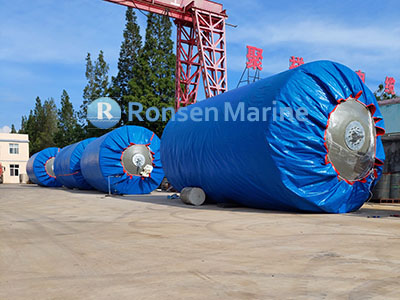 The Core: High-Density Closed-Cell Foam
The heart of the fender is its closed-cell EVA foam core. This material acts like a highly resilient sponge. Upon impact, the foam compresses, converting the kinetic energy of a berthing vessel into internal energy. Once the pressure subsides, the foam instantly rebounds to its original shape.
Key Advantage: Even if the skin is compromised, the closed cells prevent water ingress, ensuring the fender remains buoyant and functional.
The Skin: Reinforced Polyurethane Elastomer
The core is protected by a thick layer of polyurethane (PU) or polyurea elastomer. This skin is spray-applied using high-pressure equipment, creating a seamless, waterproof barrier.
Reinforcement: A spiral reinforcement layer (often utilizing nylon tire cords) is embedded within the skin to maximize tensile strength and puncture resistance.
Performance: The PU skin offers exceptional resistance to abrasion, seawater corrosion, oil, and ultraviolet (UV) radiation.
How It Absorbs Energy
Foam filled fenders operate on the principle of compressive deformation. When compressed to 60% of its original diameter:
Reaction Force: Increases progressively from low to high, minimizing stress on the vessel hull.
Energy Absorption: Extremely high. Studies show foam fenders can absorb 1.2 to 1.5 times more energy than equivalent-sized pneumatic fenders.
Foam Filled Fender vs. Pneumatic Fender
Buyers often compare these two floating fender types. Here is how they stack up:
| Feature | Foam Filled Fender | Pneumatic (Yokohama) Fender |
|---|---|---|
| Buoyancy | Unsinkable(Watertight core) | Floats(Risk of sinking if ruptured) |
| Maintenance | Zero (Maintenance-cree) | Requires regular pressure checks |
| Damage Response | Puncture does not effect performance | Requires immediate repair |
| Weight | 60%-70% lighter than steel alternatives | Moderate weight |
Key Advantages of Foam Filled Fenders
Unsinkable Design: The closed-cell foam core guarantees 100% buoyancy, eliminating the risk of losing equipment at sea.
Maintenance-Free: No valves, no air pressure checks, and no risk of bursting. Install it and forget it.
Extreme Durability: The polyurethane skin is highly resistant to scratches, friction, and impacts from rough berthing.
Weather Resistance: Performs reliably in harsh environments, resisting acid, alkali, and extreme temperatures (-40°C to +70°C).
Lightweight: Weighs significantly less than traditional rubber or steel fenders, simplifying handling and installation.
Customizable: Available in virtually any size and color. Non-marking skins are available for white hulls (e.g., yachts, cruise ships).
Technical Specifications & Classifications
Types of Assembly
Based on external fitting requirements, foam fenders are categorized into three main types:
Sleeve Type: Features a protective chain or rubber sleeve.
Sleeveless Type: Relies solely on the tough PU skin; ideal for clean hulls.
Rotating Ear Type: Equipped with swivel lifting eyes for easy suspension.
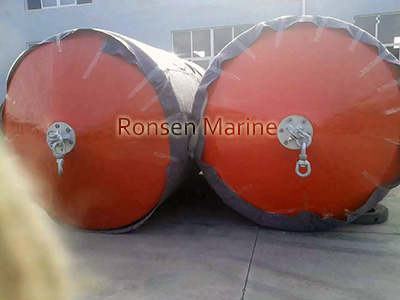 Standard Sizes
We offer a full range of standard and custom sizes:
Diameter (D): 0.5m to 3.3m (Custom sizes available up to 4.5m+)
Length (L): 1.0m to 6.5m
Performance: At 60% compression, reaction forces range from 1.5 tons to 160 tons, with energy absorption from 0.18 to 114 ton-meters.
International Certifications
Our foam filled fenders are manufactured under strict quality control and hold certifications from leading international classification societies:
✅ CCS (China Classification Society)
✅ BV (Bureau Veritas)
✅ DNV (Det Norske Veritas)
✅ ABS (American Bureau of Shipping)
 Performance in Extreme Conditions
Effect of Temperature
Polyolefin foams are engineered to perform across a wide thermal range.
High Temperatures: In hot climates, foam may slightly soften. We recommend upsizing the fender by 5-10% for installations in extreme heat to compensate for reduced stiffness.
Low Temperatures: In freezing conditions, the foam becomes stiffer, actually increasing its energy absorption capacity without compromising structural integrity.
Effect of Compression Speed
Foam fenders perform exceptionally well under dynamic loads. At high strain rates (fast berthing speeds), the foam core stiffens, allowing it to absorb significantly more energy than during slow, static compression. This ensures reliable protection even during high-speed emergency stops.
Common Applications
Thanks to their robust nature, foam filled fenders are used across the maritime industry:
Naval & Military Berths: Ideal for navy vessels due to their unsinkable nature and low maintenance.
Offshore Oil & Gas: Protecting platforms and tankers in open seas.
Cruise & Ferry Terminals: Non-marking options protect expensive white hulls.
Ship-to-Ship (STS) Transfers: Providing stable cushioning between moving vessels.
Ports & Harbors: General cargo berthing and corner protection.
Ro-Ro & Bulk Carriers: Handling heavy loads and frequent traffic.
FAQ: People Also Ask
Q: Can a foam filled fender really sink?
A: No. The core is made of 100% closed-cell foam. Unlike pneumatic fenders that lose buoyancy if punctured, foam fenders remain afloat and operational even if the outer skin is damaged.
Q: How long do foam filled fenders last?
A: The service life is typically 10 to 15 years. With proper care and suitable environmental conditions, many high-quality foam fenders can last up to 30 years.
Q: Do foam fenders leave black marks on ships?
A: Standard fenders may leave slight marks, but we offer non-marking (white) polyurethane skins specifically designed for cruise ships, yachts, and other vessels with light-colored hulls.
Q: What is the difference between EVA foam and Polyurethane foam?
A: EVA (Ethylene-Vinyl Acetate) foam is generally lighter and offers excellent flexibility and rebound. Polyurethane foam is often denser and can offer higher load-bearing capacity. Both are used in high-performance marine fenders.
Q: Are foam filled fenders heavier than pneumatic ones?
A: They are denser than air-filled fenders but significantly lighter (60-70% lighter) than comparable steel fenders, making them relatively easy to handle with standard port equipment.
Conclusion
A foam filled fender is more than just a bumper—it is a strategic investment in safety and operational efficiency. By combining a 100% closed-cell EVA core with a reinforced polyurethane skin, these fenders offer unmatched durability, zero maintenance, and the peace of mind that comes with an unsinkable design.
Whether you are outfitting a naval base, an offshore platform, or a busy commercial port, foam filled fenders provide the resilient protection your assets deserve.
Ready to specify the right fender for your project?
Contact our marine engineering team today for a free technical consultation, detailed drawings, and a competitive quotation tailored to your specific berthing requirements.

