
What Is Foam Fender Classification?
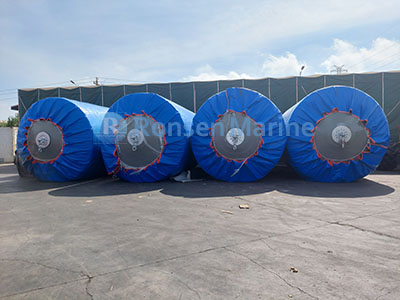 Foam fender classification refers to the systematic categorization of foam‑filled marine fenders based on their external protection system, geometric shape, energy‑absorption performance, and compliance with international design standards. Also known as foam‑filled fender types or foam fender categories, this classification helps port authorities, marine engineers, and ship operators select the correct fender for specific berthing energies, vessel sizes, and environmental conditions.
A foam‑filled fender typically consists of three layers: a closed‑cell polyethylene (PE) or EVA foam core, a nylon‑filament reinforcement layer, and a polyurethane (PU) or polyurea elastomer skin. Classification focuses primarily on how the outer protection and shape are configured to handle impact, abrasion, and hull pressure.

Why Foam Fender Classification Matters
Choosing the wrong fender type can lead to premature wear, higher lifecycle costs, or even operational downtime. Proper classification ensures:
✅ Correct energy absorption (EA) and reaction force (RF) matching
✅ Reduced hull damage and marking
✅ Lower maintenance in harsh or high‑traffic environments
✅ Compliance with PIANC WG211 and ASTM testing protocols
 1. Classification by External Protection System
The most common and practical way to classify foam fenders is by their outer protective layer.
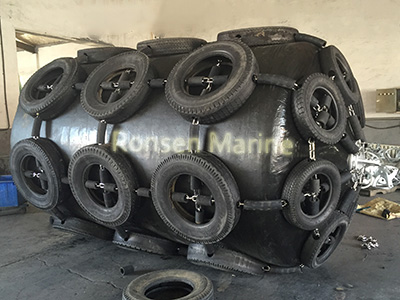
A. Net‑Type Foam Fenders (Chain & Tire Net)
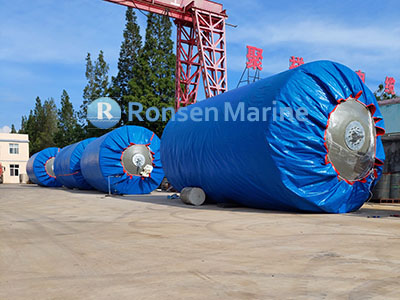
These fenders are encased in a protective net made of steel chains and recycled rubber tires.
Key Features: Extremely high abrasion resistance; sacrificial layer absorbs surface wear before it reaches the PU skin.
Best For: Bulk cargo terminals, ore/coal ports, tug berths, and workboat docks where rough hulls or heavy contact occur.
Trade‑Off: Heavier, more complex to install, and may mark softer hulls.
B. Rope‑Net Foam Fenders
Instead of steel chains, these use high‑strength synthetic fiber ropes (often nylon or polyester).
Key Features: Lighter than chain‑net versions; softer contact with vessel hulls; moderate abrasion protection.
Best For: Small‑to‑medium ports, yacht marinas, passenger terminals where hull aesthetics matter.
Trade‑Off: Less durable in extremely aggressive industrial environments.
C. Skin‑Only (Netless / Coated) Foam Fenders
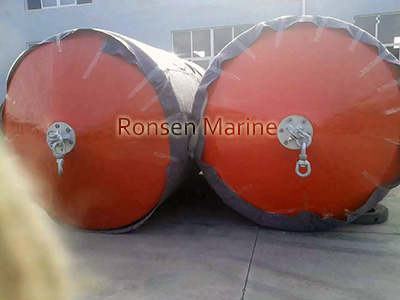
No external net—protection relies entirely on a thick, high‑performance PU or polyurea coating sprayed directly over the foam core and reinforcement.
Key Features: Smooth, non‑marking surface; easiest to inspect and clean; lowest weight.
Best For: Medium‑duty berths, floating pontoons, cruise ship terminals, naval vessels.
Trade‑Off: Dependent on coating quality; less resistant to sharp or abrasive contact.
| Aspect | Net‑Type Foam Fender | Rope‑Net Foam Fender | Skin‑Only (Netless) Foam Fender |
|---|---|---|---|
| Abrasion Resistance | Very High | Medium | Medium |
| Hull Friendliness | Medium | High | High |
| Weight | High | Medium | Low |
| Maintenance | Medium | Low | Very Low |
2. Classification by Shape / Configuration
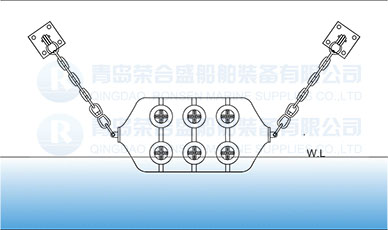
 Foam fenders are also classified by their geometry and mounting method.
Cylindrical Foam Fenders
The most widely used type—available from 300 mm to 4,200 mm OD, suspended vertically from quay faces or floating freely between vessels. Ideal for general port berthing and ship‑to‑ship (STS) transfer.
Donut (Toroidal) Foam Fenders
Ring‑shaped fenders that slide over a tubular pile and rotate freely with tidal changes.
Key Features: Self‑centering, floating, minimal adjustment needed.
Best For: Breasting dolphins, bridge piers, lock entrances, ferry terminals.
Boat‑Fender (Hull‑Mounted) Foam Fenders
Continuous or segmented foam rings permanently bonded around a vessel’s hull (tugs, pilot boats, CTVs). Puncture‑proof and custom‑engineered to hull geometry.
3. Classification by Performance Grade (Energy Absorption)
Manufacturers classify foam fenders into performance grades based on foam core density and targeted energy absorption at 60% deflection (standard compression):
- Standard (STD) Grade: Baseline energy absorption for normal commercial berthing.
- High‑Capacity (HC / HC+) Grade: Increased foam density and reinforced skin for higher berthing energies (bulk carriers, VLCCs).
💡 Note: When comparing grades, multiply the STD energy value by the manufacturer’s grade ratio (commonly 1.3×–1.5× for HC grades).
 4. Classification by International Standards
Professional classification also references design and testing standards:
- PIANC WG211 (2024): Guidelines for fender system design, energy absorption calculations, reaction force limits, and testing protocols. Recommends hull pressure below 200 kN/m² for most vessel types.
- ASTM F2192: Standard test method for determining berthing energy and reaction force.
- ASTM D2240: Measures polyurethane hardness (Shore A durometer), typically 75–95 Shore A for foam‑fender skins.
How to Choose the Right Foam Fender Classification
Selecting the correct classification depends on:
- Berthing Energy & Vessel Size – Higher energy favors net‑type + HC grade.
- Hull Condition – Rough/reinforced hulls increase abrasion risk → chain‑net.
- Traffic Frequency – High‑contact terminals benefit from sacrificial nets.
- Aesthetic Requirements – Passenger/cruise terminals → skin‑only/netless.
- Maintenance Capability – Remote sites → low‑maintenance skin‑only designs.
- Environmental Factors – Temperature range (PU skin typically -40°C to +60°C), UV exposure, chemical splash.
FAQ: Common Questions About Foam Fender Classification
Q: Are foam fenders classified the same way as pneumatic fenders?
A: No. Pneumatic fenders are classified by internal air pressure and type (e.g., Yokohama‑type), while foam fenders are classified by external protection, shape, and foam‑core performance grade.
Q: Can a skin‑only foam fender be used in an oil terminal?
A: Generally not recommended. Oil terminals and container berths typically require chain‑net protection due to higher impact energy and abrasive conditions.
Q: What is the typical service life of each classification?
A: With proper inspection, net‑type and rope‑net fenders often exceed 10–15 years; skin‑only fenders may require recoating after 8–12 years depending on UV and abrasion exposure.
Conclusion
So, what is foam fender classification? It is the organized system of categorizing foam‑filled marine fenders by external protection (chain‑net / rope‑net / skin‑only), shape (cylindrical / donut / boat‑fender), performance grade (STD / HC), and compliance with PIANC WG211 and ASTM standards. Understanding these classifications enables engineers and port operators to match fender specifications precisely to berthing conditions—reducing damage, maintenance costs, and downtime.

